Saturday, July 9, 2011

Friday, July 8, 2011

Thursday, June 30, 2011

Frozen Dead Guy Days

The Gothic Tea Society
www.gothicteasociety.com

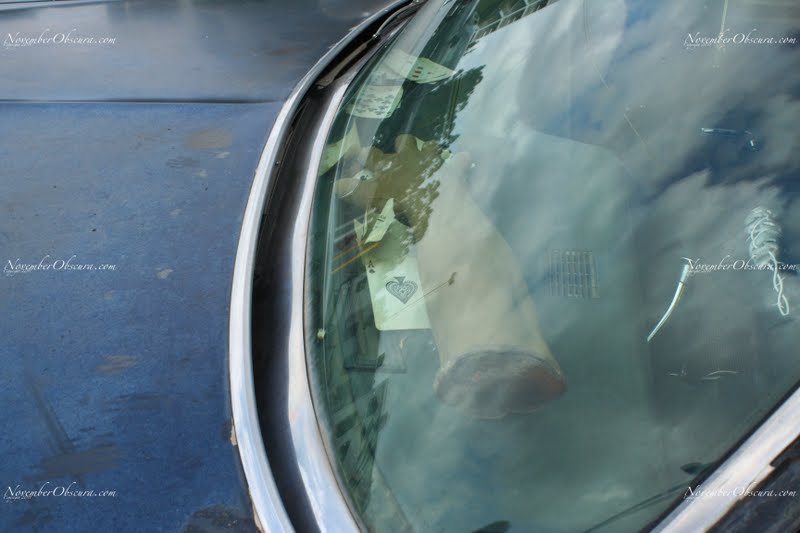
The Frozen Dead Guy is one Bredo Morstøl who was brought here to the USA recently deceased and preserved on dry ice in 1989.

Gradpa Bredo


It is an odd story, and you can read more about it HERE

There is an entire festival around this guy now in Nederland , Colorado.


That's Grandpa in there with all that ice- on his birthday!

Saturday, June 25, 2011

Körperwelten or Body Worlds

The Gothic Tea Society
www.gothicteasociety.com


People around the world have flocked to see this amazing exhibit. I hope to see it myself the next time it comes to Los Angeles. Have you seen it? What did you think? Leave a comment and tell us all about it!


Wiki- Body Worlds (German title: Körperwelten) is a traveling exhibition of preserved human bodies and body parts that are prepared using a technique called plastination to reveal inner anatomical structures. The exhibition's developer and promoter is German anatomist Gunther von Hagens, who invented the plastination technique in the late 1970s at the University of Heidelberg.


Read more on this fascinating exhibit HERE

Tuesday, June 21, 2011

Mummies of the World Exhibit

The Gothic Tea Society
www.gothicteasociety.com


The Franklin Institute | 222 North 20th Street, Philadelphia, PA 19103 | 215.448.1200

Read all the details HERE


Monday, June 20, 2011

Gravestone of the Roman Gladiator Diodorus

The Gothic Tea Society
www.gothicteasociety.com


This 1,800 year old tombstone and epitaph tell a story.
  An enigmatic message on a Roman gladiator's 1,800-year-old tombstone has finally been decoded, telling a treacherous tale.
The epitaph and art on the tombstone suggest the gladiator, named Diodorus, lost the battle (and his life) due to a referee's error, according to Michael Carter, a professor at Brock University in St. Catharines, Canada. Carter studies gladiator contests and other spectacles in the eastern part of the Roman Empire.


 Click HERE to see the whole story!

Monday, May 2, 2011

Chick Webb and his Orchestra- When America was Swinging.


Chick Webb was considered one of the giants of swing back in the late 20’s & 30’s. His music was very upbeat and fun for its time. Some blushed (the older generation) at this type of music with strong thumping and kids dancing with their partner in the most un-lady like ways. Why, was this devils music? If it was the devils music, he sure has good taste!


Chick was mentored by Duke Ellington, toured with Louis Armstrong, argued with Jelly Roll Morton, jammed with Artie Shaw, married a beautiful dancer, discovered and practically adopted Ella Fitzgerald, beat Benny Goodman and Count Basie in legendary battle of the bands.


The Savoy Ballroom was the home of the amazing Lindy Hop dancers, and the first venue in America where Blacks and Whites could dance and socialize together. The Savoy opened in 1926 and was an almost instant sensation. It was enormous – two stories high, with a ballroom that spanned almost an entire city block. It comfortably held over 4,000 dancers, while on one jam-packed occasion it was reported that over 15,000 fans crowded in. There were two bandstands, one that could hold a full dance band and another one for smaller groups. Chick Webb and his orchestra became the main house band. Born fatherless and poor, Chick Webb broke his back, developed spinal tuberculosis, and was a hunchbacked dwarf in constant pain, yet he virtually invented modern drumming and built the hottest band of the 1930s (it was the Savoy Ballroom’s “house band”).


Passing away at the young age of 30, Chick’s brief, inspiring life illuminates the society-changing power of music and the ability of everyone (with or without disabilities) to reach beyond their apparent limits.

The Savoy’s existence was all too short, just like Chick Webb’s band. Its heyday ended in the 1940s along with so many other famed big-band venues. The Savoy persevered with bebop and more dance contests but by 1958 it fell victim to changing tastes and urban renewal. The block was torn down and replaced with an apartment complex. For decades there was nothing to remind passersby of the history that took place between 140th and 141st Streets. Finally, a renewed interest in Harlem’s history led the apartment complex to be renamed Savoy Park, and a commemorative plaque was put up. The name also lives on in many other ballrooms around the United States, Britain, and Australia, and in dozens of dance steps and songs still being performed.

If you can find Chick Webb and his Orchestra- “Stomping at the Savoy” I strongly recommend this 4 cd set. It will keep you swinging with its driving beats and songs that make you feel like you stepped back in time.

tinawinter.gts@gmail.com

Tuesday, April 12, 2011

Bedlam- Bethlehem Hospital

The Gothic Tea Society www.gothicteasociety.com


A place so notorious, it's name is synonymous with 'uproar and confusion'. Bedlam- many of us have used the term. Here is the story behind it. A recent article about a macabre but fantastic archeological find in the old footprint of Bedlam can be seen HERE


Wiki says: The Bethlem Royal Hospital is a psychiatric hospital located in London, United Kingdom and part of the South London and Maudsley NHS Foundation Trust. Although no longer based at its original location, it is recognised as the world's first and oldest institution to specialise in mental illnesses. It has been variously known as St. Mary Bethlehem, Bethlem Hospital, Bethlehem Hospital and Bedlam. 

The Hospital is closely associated with King's College London and in partnership with the King's College London Institute of Psychiatry is a major centre for psychiatric research. It is part of both the King's Health Partners academic health science centre and the NIHR Biomedical Research Centre for Mental Health. 

The word bedlam, meaning uproar and confusion, is derived from its name. Although the hospital is now at the forefront of humane psychiatric treatment, for much of its history it was notorious for cruelty and inhumane treatment – the epitome of what the term "madhouse" connotes to the modern reader.


Bethlem has been a part of London since 1247, first as a priory for the sisters and brethren of the Order of the Star of Bethlehem, from where the building took its name. Its first site was in Bishopsgate (where Liverpool Street station now stands). In 1337 it became a hospital, and it admitted some mentally ill patients from 1357, but did not become a dedicated psychiatric hospital until later. 

Early sixteenth century maps show Bedlam, next to Bishopsgate, as a courtyard with a few stone buildings, a church and a garden. Conditions were consistently dreadful, and the care amounted to little more than restraint. There were 31 patients and the noise was "so hideous, so great; that they are more able to drive a man that hath his wits rather out of them." Violent or dangerous patients were manacled and chained to the floor or wall. Some were allowed to leave, and licensed to beg.

 It was a Royal hospital, but controlled by the City of London after 1557, and managed by the Governors of Bridewell. Day to day management was in the hands of a Keeper, who received payment for each patient from their parish, livery company, or relatives. In 1598 an inspection showed neglect; the "Great Vault" (cesspit) badly needed emptying, and the kitchen drains needed replacing. There were 20 patients there, one of whom had been there over 25 years. 

In 1620, patients of Bethlem banded together and sent a "Petition of the Poor Distracted People in the House of Bedlam (concerned with conditions for inmates)" to the House of Lords. 


The Hospital became famous and notorious for the brutal ill-treatment meted out to the mentally ill. In 1675 Bedlam moved to new buildings in Moorfields designed by Robert Hooke, outside the City boundary. The playwright Nathaniel Lee was incarcerated there for five years, reporting that: "They called me mad, and I called them mad, and damn them, they outvoted me." 

The inmates were first called "patients" in 1700, and "curable" and "incurable" wards were opened in 1725-34. In the 18th century people used to go to Bedlam to stare at the lunatics. For a penny one could peer into their cells, view the freaks of the "show of Bethlehem" and laugh at their antics. Entry was free on the first Tuesday of the month. In 1814 alone, there were 96,000 such visits.

More on what it was like inside Bedlam can be found HERE at the Royal College of Physicians.

Monday, April 4, 2011

Doll House

The Gothic Tea Society www.gothicteasociety.com


Friday, March 25, 2011

Triangle Shirtwaist Factory Fire 100 Years Ago Today

The Gothic Tea Society www.gothicteasociety.com


100 Years ago today there was a terrible tragedy. A fire killed 146 workers, mostly female immigrants.
For a modern article on the 100 year remembrance go HERE


Wiki says: The Triangle Shirtwaist Factory fire in New York City on March 25, 1911, was the deadliest industrial disaster in the history of the city of New York and resulted in the fourth highest loss of life from an industrial accident in U.S. history. The fire caused the deaths of 146 garment workers, who either died from the fire or jumped to their deaths. Most of the victims were recent immigrant Jewish and Italian women aged sixteen to twenty-three.  Many of the workers could not escape the burning building because the managers had locked the doors to the stairwells and exits. People jumped from the eighth, ninth, and tenth floors. The fire led to legislation requiring improved factory safety standards and helped spur the growth of the International Ladies' Garment Workers' Union, which fought for better working conditions for sweatshop workers. 


The factory was located in the Asch Building, at 29 Washington Place, now known as the Brown Building, which has been designated a National Historic Landmark and a New York City landmark.

The Triangle Waist Company factory occupied the eighth, ninth, and tenth floors of the Asch Building on the northwest corner of Greene Street and Washington Place, just to the east of Washington Square Park, in the Greenwich Village area of New York City. Under the ownership of Max Blanck and Isaac Harris, the factory produced women's blouses, known as "shirtwaists." The factory normally employed about 500 workers, mostly young immigrant women, who worked nine hours a day on weekdays plus seven hours on Saturdays. As the workday was ending on the afternoon of Saturday, March 25, 1911, a fire flared up at approximately 4:45 PM in a scrap bin under one of the cutter's tables at the northeast corner of the eighth floor.


A large crowd of bystanders gathered on the street, witnessing sixty-two people jumping or falling to their deaths from the burning building. Louis Waldman, later a New York Socialist state assemblyman, described the scene years later:

One Saturday afternoon in March of that year — March 25, to be precise — I was sitting at one of the reading tables in the old Astor Library... It was a raw, unpleasant day and the comfortable reading room seemed a delightful place to spend the remaining few hours until the library closed. I was deeply engrossed in my book when I became aware of fire engines racing past the building. By this time I was sufficiently Americanized to be fascinated by the sound of fire engines. Along with several others in the library, I ran out to see what was happening, and followed crowds of people to the scene of the fire. 


A few blocks away, the Asch Building at the corner of Washington Place and Greene Street was ablaze. When we arrived at the scene, the police had thrown up a cordon around the area and the firemen were helplessly fighting the blaze. The eighth, ninth, and tenth stories of the building were now an enormous roaring cornice of flames. 


Word had spread through the East Side, by some magic of terror, that the plant of the Triangle Waist Company was on fire and that several hundred workers were trapped. Horrified and helpless, the crowds — I among them — looked up at the burning building, saw girl after girl appear at the reddened windows, pause for a terrified moment, and then leap to the pavement below, to land as mangled, bloody pulp. This went on for what seemed a ghastly eternity. Occasionally a girl who had hesitated too long was licked by pursuing flames and, screaming with clothing and hair ablaze, plunged like a living torch to the street. Life nets held by the firemen were torn by the impact of the falling bodies. 

The emotions of the crowd were indescribable. Women were hysterical, scores fainted; men wept as, in paroxysms of frenzy, they hurled themselves against the police lines. 


The remainder waited until smoke and fire overcame them. The fire department arrived quickly but was unable to stop the flames, as there were no ladders available that could reach beyond the sixth floor. The fallen bodies and falling victims also made it difficult for the fire department to approach the building.



Related Posts with Thumbnails